
 English
  Español
  Deutsch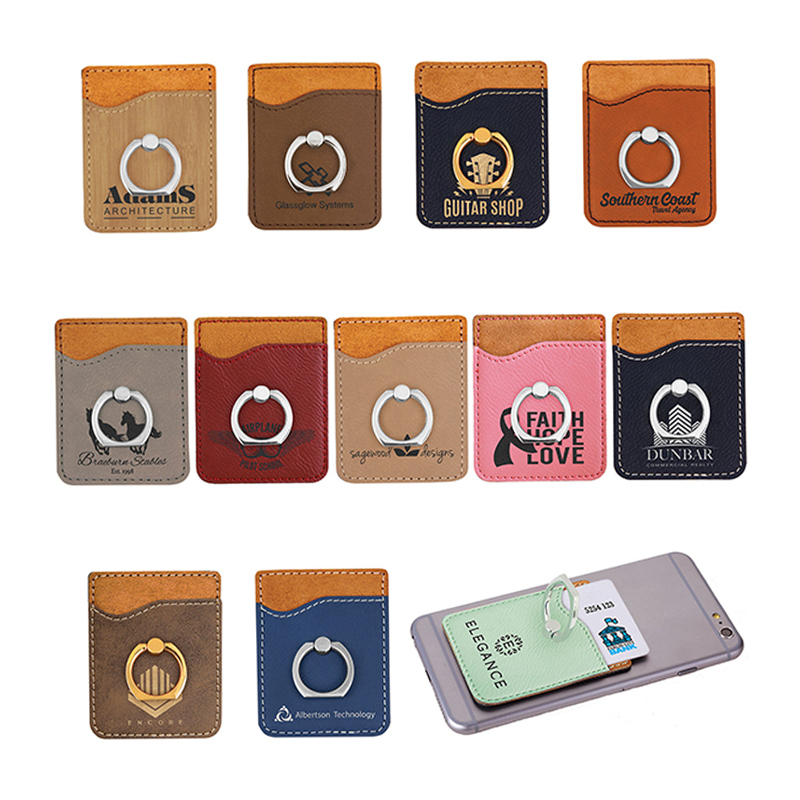
Laserable Leatherette Sheets with Adhesive: The Buyer's Guide to Engraving
2026-08-25Most engraving problems with adhesive-backed laserable leatherette sheets are not caused by the laser. They are caused by choosing the wrong blank for the job. When the sheet is right, the work flow is simple: engrave the blank, peel the release liner, and press the piece onto a notebook, gift box, coaster, badge, or luggage tag. No glue pots, no clamps, no misaligned patches. The catch is that thickness, surface texture, and adhesive quality all change how the material behaves under the beam. This guide explains what to check before you buy, so you can pick a sheet that produces clean marks and stays in place after mounting.
What Makes a Leatherette Sheet "Laserable"
When a supplier calls a leatherette sheet laserable, it means the surface is engineered to produce a clear, dark mark when a CO 2 laser removes or scorches the coating. These sheets are usually made with a polyurethane (PU) top layer designed for engraving, not with general-purpose upholstery material. Standard coated leathers can melt, leave a shiny edge, or produce an uneven brown mark, which is why engraving shops need blanks made specifically for laser work.
Genuine leather has a natural grain and smell, but it also has surface variations that make identical logos harder to repeat across a large batch. Synthetic sheets give you a uniform surface, which matters when the same design will be reproduced hundreds of times. If you are weighing material choices, this explanation of how laserable leatherette compares with genuine leather covers the practical trade-offs in more detail.
Why an Adhesive Backing Changes the Work Flow
Laserable leatherette sheets with adhesive come with a protective liner over the glue layer. The liner keeps the sheet flat during engraving, stops the adhesive from picking up dust, and prevents small engraved pieces from sticking to the machine table. After engraving, you peel the liner and mount the piece directly onto the intended surface. For workshops producing name badges, phone card holders, wallets, book covers, and small gift items, this removes the drying time and mess of liquid adhesive.
There is one situation where adhesive-backed sheets need extra care. When the laser cuts through the full thickness, the edge passes through the adhesive layer, and the heat can soften the glue so it clings to the cut edge. If you see sticky edges on cut-out shapes, the usual fix is to raise the cutting speed, reduce power, or apply masking tape over the cut line before the pass. For products where a perfectly clean dry edge matters more than fast mounting, sheets without adhesive are the safer option. That is why the same texture is usually offered in both versions.
Common applications for adhesive-backed sheets include:
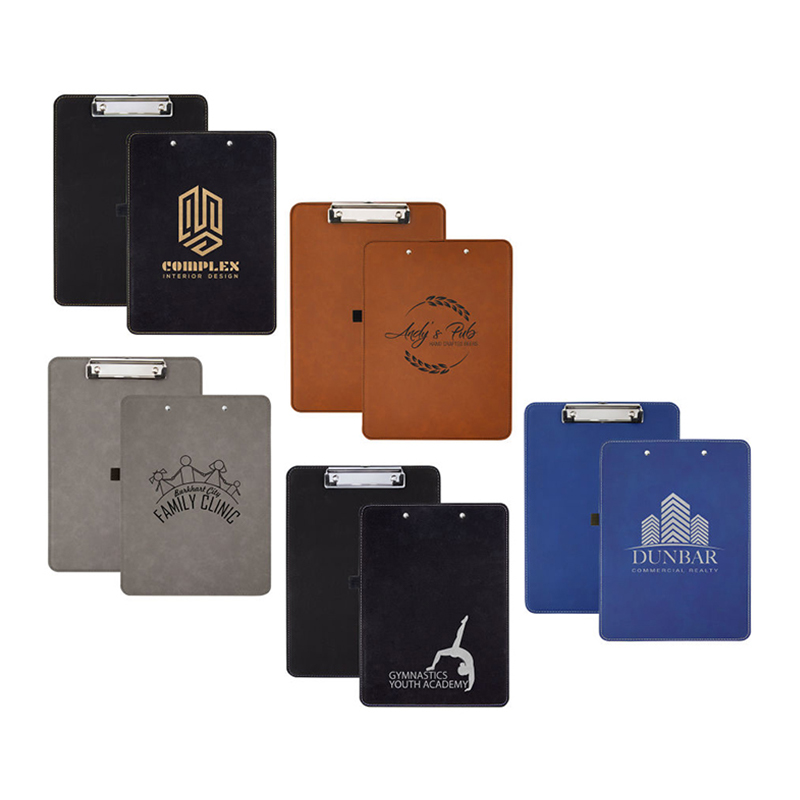
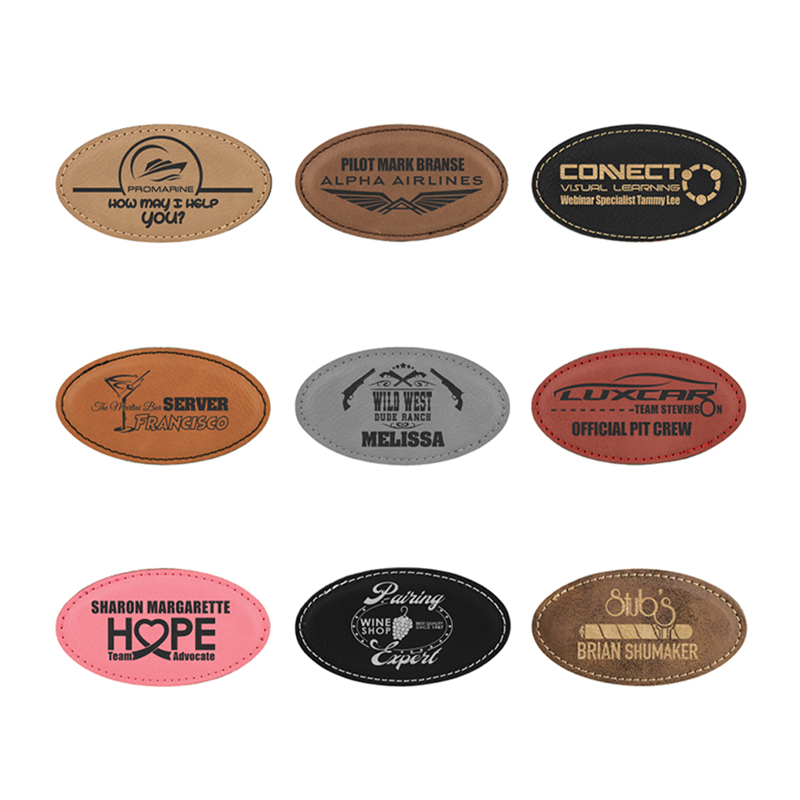
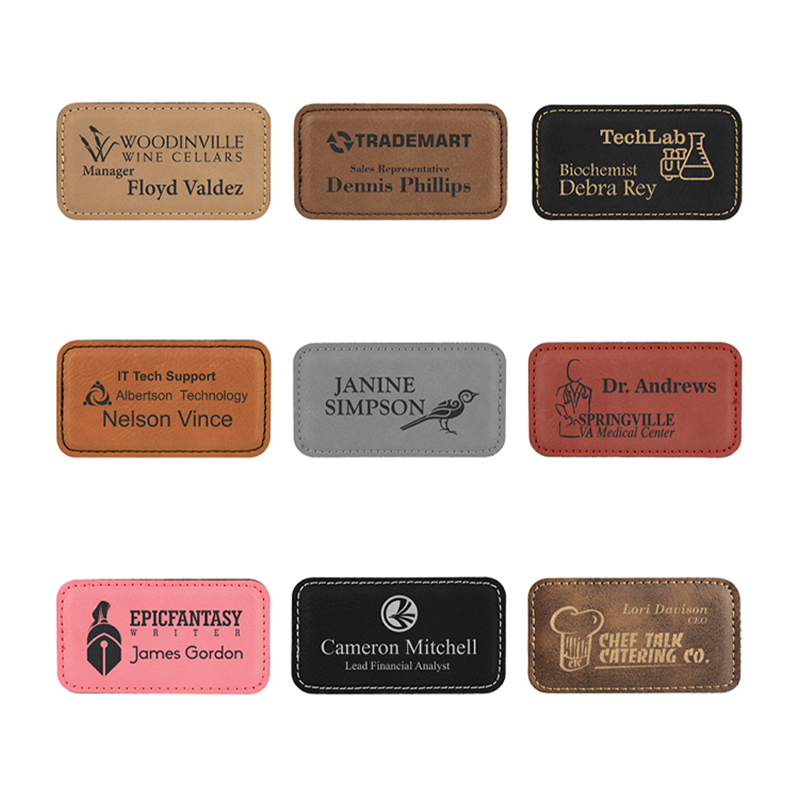
- Personalised name badges and ID holders
- Book and bible covers with engraved titles
- Luggage tags and passport covers
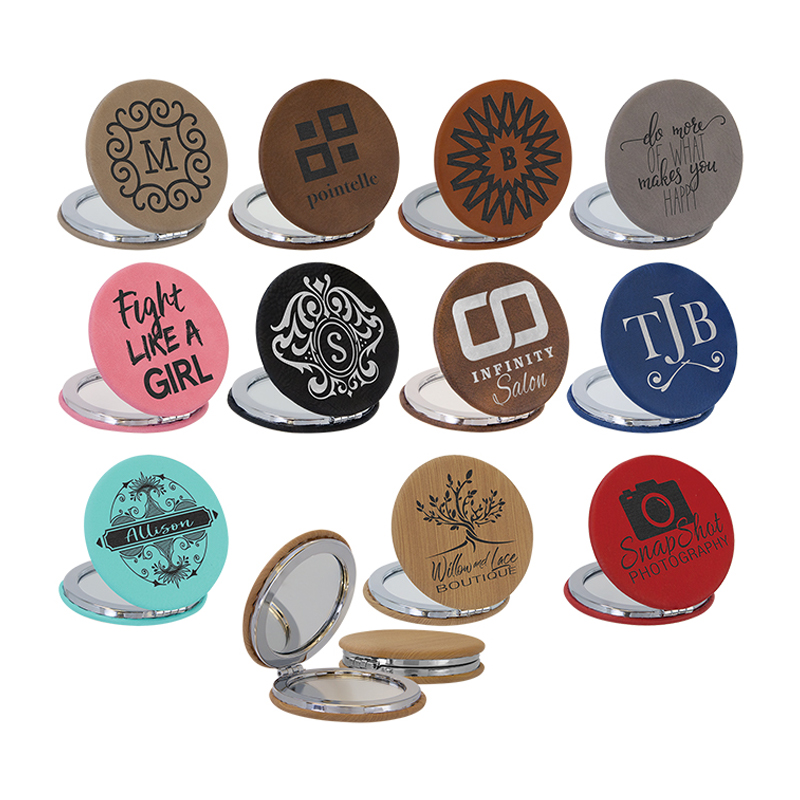
- Coasters, ornaments, and keychains
- Gift boxes and certificate holders
What to Check Before You Buy: Thickness, Texture, and Adhesive
Before placing an order, decide what the sheet has to do. The two most important specifications are thickness and surface texture. In the current sheet-stock range, 1.8 mm is the standard thickness for laserable leatherette: stiff enough to feed through an engraver, flexible enough for covers and pouches, and deep enough to accept a clean engraving without burn-through. Thinner sheets wrap around corners more easily but offer less depth for the mark.
| Sheet type | Typical thickness | Texture and finish | Typical use |
|---|---|---|---|
| Smooth PU leatherette | 1.8 mm | Fine, even surface | Badges, book covers, small text logos |
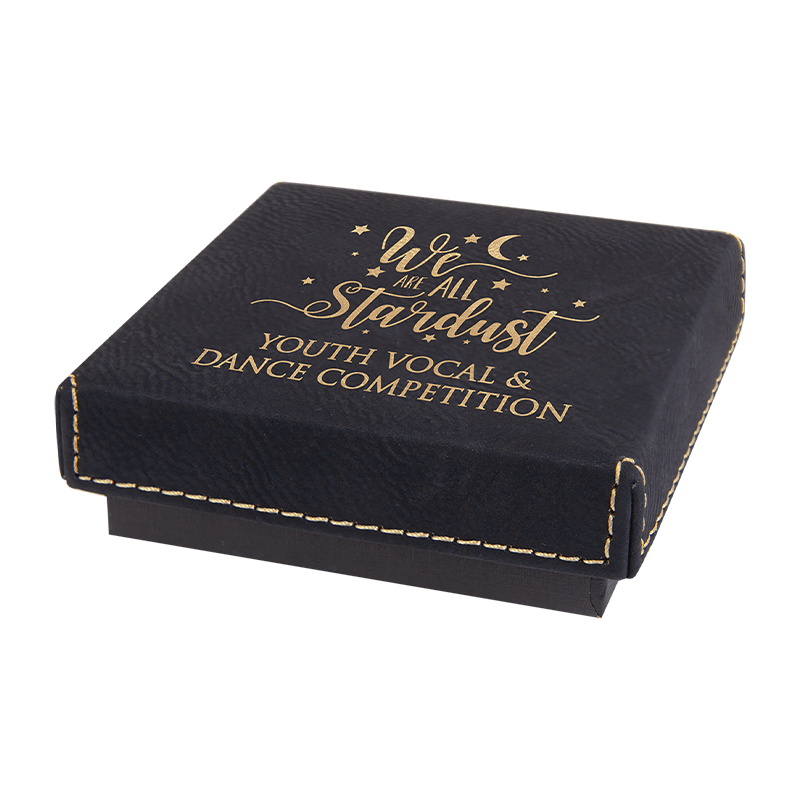
| Litchi grain | 1.8 mm | Pebbled, tactile | Gift boxes, wallets, frames |
| Matte vintage | 1.8 mm | Dull, retro finish | Journals, home decor, luggage tags |
| Denim look | 1.8 mm | Fabric-like printed texture | Casual bags, notebooks |
| Crocodile embossing | 1.8 mm | Deep, embossed grain | Flask sets, premium gift boxes |
| Double-layer construction | Variable | Smooth top, firmer body | Pieces that need a stiffer cut edge |
For most general engraving, laserable leatherette sheets with adhesive in the standard smooth 1.8 mm construction are the most practical starting point. If you want a tactile surface that hides fingerprints and gives a more expensive feel, litchi texture laserable leatherette sheets are a popular choice. When the final product needs extra stiffness or a more defined edge after cutting, double-layer laserable leatherette sheets give you a firmer body without losing a clean engraving surface.
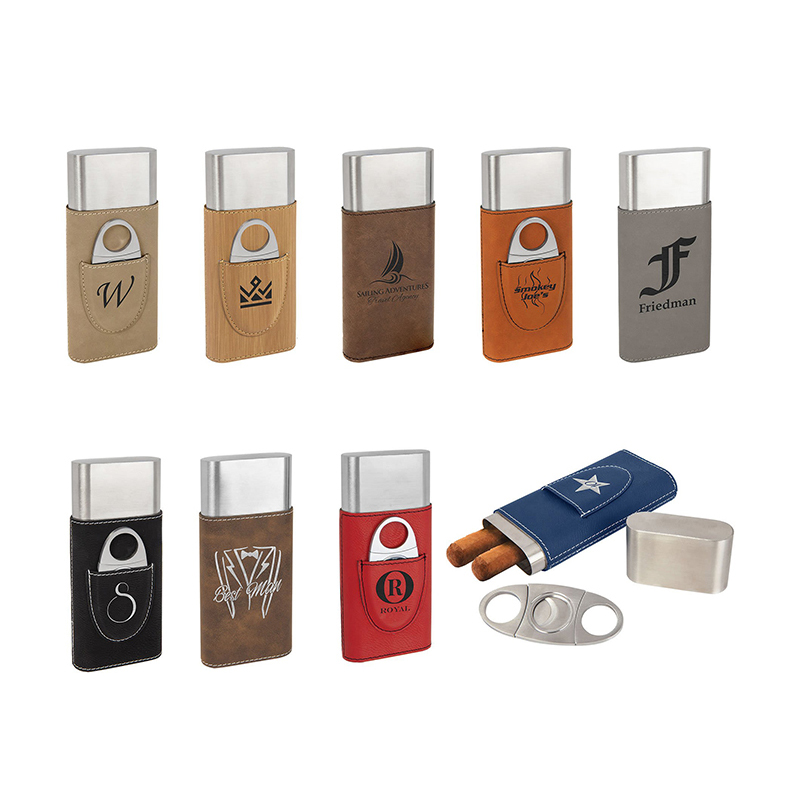
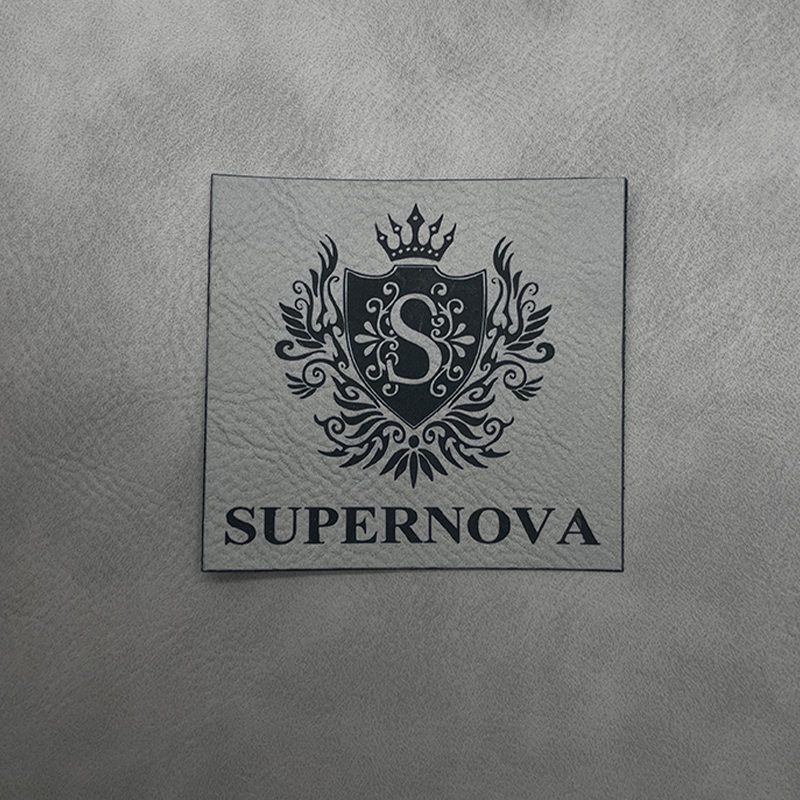 OEM/ODM Double-layer laserable leatherette sheets with adhesive/without adhesive Yancheng Supernova Digital Science & Technology Co., Ltd. is China OEM/ODM Double-layer laserable leatherette sheets with adhesive/withou... View Product →
 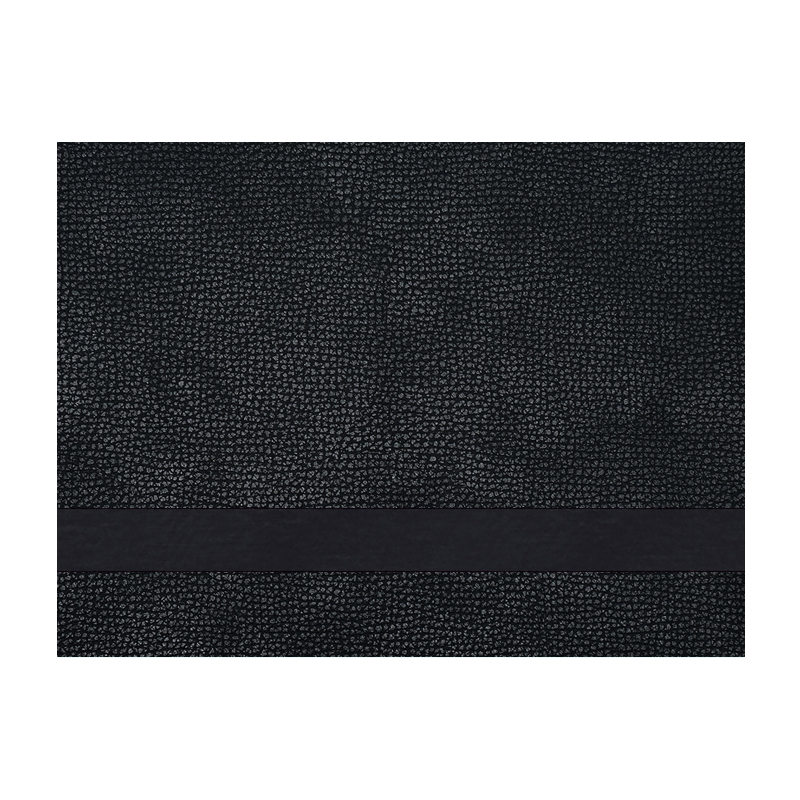 OEM/ODM Litchi texture laserable leatherette sheets with adhesive/without adhesi Yancheng Supernova Digital Science & Technology Co., Ltd. is China OEM/ODM Litchi texture laserable leatherette sheets with adhesive/with... View Product →
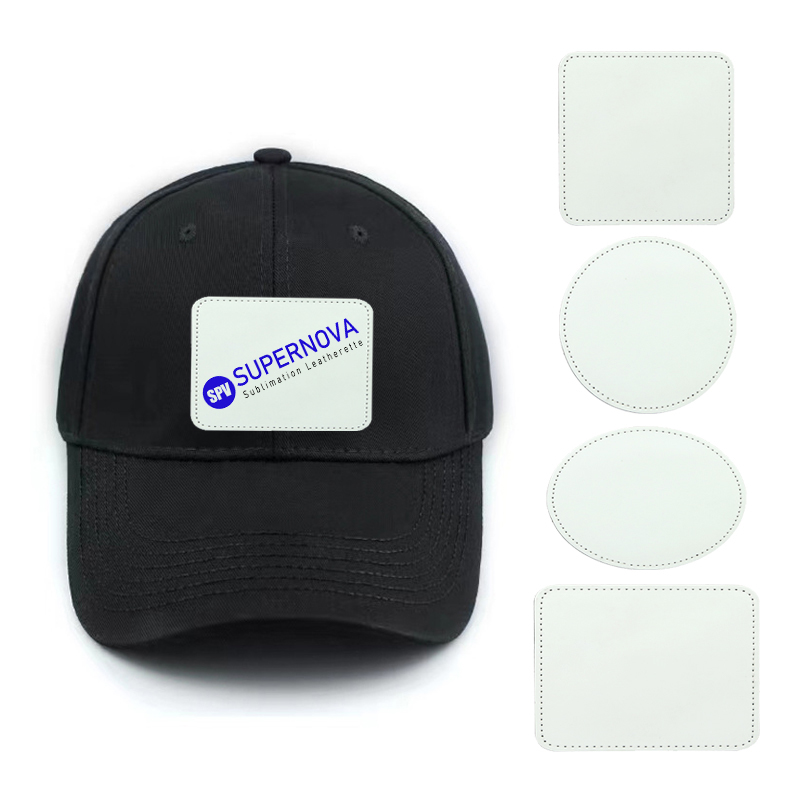
  OEM/ODM laserable leatherette sheets with adhesive /without adhesive Suppliers, Yancheng Supernova Digital Science & Technology Co., Ltd. is China OEM/ODM laserable leatherette sheets with adhesive /without adhesive s... View Product →
 Getting Consistent Engraving Results
A reliable process matters more than high laser power. The simplest habit is to engrave the sheet while the release liner is still attached. The liner keeps the material flat, prevents the adhesive from collecting debris, and stops small engraved pieces from shifting. After engraving, peel the liner and mount the piece. Run a test on a scrap piece using a small grid of power and speed settings before committing to the full batch.
For a typical CO 2 laser in the 30 to 60 watt range, start at a moderate power and a slower speed, then increase the speed until you get a dark, crisp mark without over-burning the coating. The engraving colour is usually a dark charcoal or brown-black, depending on the surface texture and the coating formula. Textured surfaces add character, but very fine text can fall into the grain, so choose a smoother sheet when small lettering is part of the design.
Useful habits for laserable sheet stock with adhesive:
- Wipe the surface with a lint-free cloth before engraving.
- Use air assist to keep the focus line clear of smoke residue.
- For deep engraving, use two or three passes at moderate power instead of one high-power pass.
- Mask the cut line when cutting shapes so softened adhesive does not drag onto the surface.
- Let the sheet cool after cutting before stacking the pieces.
Buying Considerations for Production and Resale
Judging a sheet by a single sample is a common mistake. When you buy in volume for production or resale, the questions change: are colours consistent between batches, is the thickness uniform, and does the adhesive stay reliable after months of storage? Look for a supplier that controls the whole production process rather than trading generic imported sheets. Supernova has been producing laserable leatherette blanks since 2016, operates its own factory with a production team of more than 300 people, and exports to more than 30 countries, so the material exists as a serious manufacturing line rather than a side product.
Texture names can also look different from one manufacturer to another. A litchi grain or matte vintage finish is defined by the embossing pattern, colour depth, and gloss level, and those details are controlled at the factory. Use the full colour chart of leatherette textures to compare finishes before ordering, and always ask for physical samples when the order will run in large quantities. Check whether the sheet you want is stocked in both adhesive and non-adhesive versions, because some textures are only offered one way.
Adhesive-backed laserable leatherette sheets turn a plain blank into a finished personalised product quickly and cleanly. The starting point is matching the sheet to the job: choose smooth 1.8 mm stock for clear logos, textured versions for a more tactile finish, and double-layer construction when the part needs extra firmness. Get samples, engrave a test grid on your own machine, and check how the adhesive behaves when you cut through the sheet. When the blank is right, the engraving follows.
Kontaktieren Sie uns
Ihre E-Mail-Adresse wird nicht veröffentlicht. Pflichtfelder sind markiert*
Kategorien
Produktkategorie

Kontaktieren Sie uns

-
86-15851089634

-
[email protected]

-
Raum 3110, Gebäude 6, Jinrongcheng, Nr. 5 Shiji Avenue, Bezirk Yandu, Stadt Yancheng, Provinz Jiangsu, China

-
Nr. 109, Team 1, Longnian, Nanyang, Bezirk Tinghu, Stadt Yancheng, Provinz Jiangsu, China, Postleitzahl: 224000
- SCHNELLLINKS

